Buy fiduciaire.eu ?
We are moving the project
fiduciaire.eu .
Are you interested in purchasing the domain
fiduciaire.eu ?
domain@kv-gmbh.de · 0541-91531010
Buy fiduciaire.eu ?
What is grammatically correct: Dank dir or Dank deiner?
Both "Dank dir" and "Dank deiner" are grammatically correct in German, but they are used in different contexts. "Dank dir" is used when thanking someone directly, while "Dank deiner" is used when the thanks is directed towards something that belongs to the person. For example, you would say "Dank dir" when thanking someone for their help, and "Dank deiner Hilfe" when thanking someone for their help specifically. **
Is it "Vielen Dank für's Nachhausebringen" or "Vielen Dank fürs Nachhausebringen"?
Both versions are correct, but the second one "Vielen Dank fürs Nachhausebringen" is more commonly used in spoken German. The first version "Vielen Dank für's Nachhausebringen" includes an apostrophe to indicate the omitted letter "e" in "für das," which is more common in written German. Both versions convey the same meaning and can be used interchangeably. **

Similar search terms for Dank
Top-Angebote
Products related to Dank:
-
Flythe Consulting Jonetia Hurricane Wall Sconce Pair Satin Brass, Pair, Satin BrassThe Jonetia Satin Brass Hurricane Wall Sconce Pair proudly displays grandeur on your walls. These hand-forged, solid brass sconces feature a diamond design and fleur-de-lis motif. Sconces have a lacquered, satin brass finish that is done by hand. A...229,00 $*Shipping: 32,06 $Secure redirect to the provider


-
'm antworten kann. Vielen Dank!
Natürlich, ich stehe Ihnen gerne zur Verfügung, um Ihre Frage zu beantworten. Bitte zögern Sie nicht, mir Ihre Frage zu stellen, und ich werde mein Bestes tun, um Ihnen zu helfen. Vielen Dank für Ihr Vertrauen und die Gelegenheit, Ihnen zu helfen! **
-
Is "Danke" the plural of "Dank"?
No, "Danke" is not the plural of "Dank." "Dank" is a noun meaning "thanks" or "gratitude" in German, while "Danke" is the informal way of saying "thank you." So, "Dank" is the noun form and "Danke" is the verb form. **
-
What does "dank mir später" mean?
"Dank mir später" is a German phrase that translates to "thank me later" in English. It is used when someone does something helpful or kind for another person, and they expect to be thanked for it at a later time. It can be used in a playful or lighthearted manner, but it also conveys the expectation of gratitude for the favor or assistance provided. **
-
Why is Dank Memer constantly offline?
Dank Memer may be constantly offline due to server maintenance, technical issues, or high server traffic. The bot may also be undergoing updates or experiencing outages from its hosting platform. Additionally, the bot's developers may be working on fixing bugs or adding new features, causing temporary downtime. **
Is saying 'Vielen Dank im Voraus' impolite?
No, saying 'Vielen Dank im Voraus' (Thank you in advance) is not considered impolite. It is a common way to express gratitude for someone's future assistance or help. However, it is always good to consider the context and tone in which it is used to ensure it is appropriate for the situation. **
Dative or accusative with the preposition "dank"?
The preposition "dank" is typically followed by the dative case in German. This means that the noun or pronoun following "dank" will take the dative form. For example, you would say "dank dem Wetter" (thanks to the weather) or "dank meiner Familie" (thanks to my family). It's important to remember the dative case when using "dank" in German. **
Top-Angebote
Products related to Dank:
-
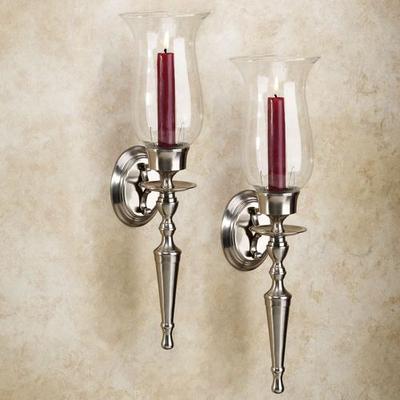
Flythe Consulting Arika Wall Sconce Pair, Pair, Satin NickelThe Arika Wall Sconce Pair is an adaptation of old-fashioned light fixtures, with an appealing design that will complement modern decor. The lacquered solid brass sconces have 4.75 dia.x7 H clear glass hurricanes that will protect your standard...179,00 $*Shipping: 22,95 $Secure redirect to the provider
-
Flythe Consulting Jonetia Hurricane Wall Sconce Pair Satin Brass, Pair, Satin BrassThe Jonetia Satin Brass Hurricane Wall Sconce Pair proudly displays grandeur on your walls. These hand-forged, solid brass sconces feature a diamond design and fleur-de-lis motif. Sconces have a lacquered, satin brass finish that is done by hand. A...229,00 $*Shipping: 32,06 $Secure redirect to the provider
-
What is grammatically correct: Dank dir or Dank deiner?
Both "Dank dir" and "Dank deiner" are grammatically correct in German, but they are used in different contexts. "Dank dir" is used when thanking someone directly, while "Dank deiner" is used when the thanks is directed towards something that belongs to the person. For example, you would say "Dank dir" when thanking someone for their help, and "Dank deiner Hilfe" when thanking someone for their help specifically. **
-
Is it "Vielen Dank für's Nachhausebringen" or "Vielen Dank fürs Nachhausebringen"?
Both versions are correct, but the second one "Vielen Dank fürs Nachhausebringen" is more commonly used in spoken German. The first version "Vielen Dank für's Nachhausebringen" includes an apostrophe to indicate the omitted letter "e" in "für das," which is more common in written German. Both versions convey the same meaning and can be used interchangeably. **
-
'm antworten kann. Vielen Dank!
Natürlich, ich stehe Ihnen gerne zur Verfügung, um Ihre Frage zu beantworten. Bitte zögern Sie nicht, mir Ihre Frage zu stellen, und ich werde mein Bestes tun, um Ihnen zu helfen. Vielen Dank für Ihr Vertrauen und die Gelegenheit, Ihnen zu helfen! **
-
Is "Danke" the plural of "Dank"?
No, "Danke" is not the plural of "Dank." "Dank" is a noun meaning "thanks" or "gratitude" in German, while "Danke" is the informal way of saying "thank you." So, "Dank" is the noun form and "Danke" is the verb form. **
Similar search terms for Dank
-
What does "dank mir später" mean?
"Dank mir später" is a German phrase that translates to "thank me later" in English. It is used when someone does something helpful or kind for another person, and they expect to be thanked for it at a later time. It can be used in a playful or lighthearted manner, but it also conveys the expectation of gratitude for the favor or assistance provided. **
-
Why is Dank Memer constantly offline?
Dank Memer may be constantly offline due to server maintenance, technical issues, or high server traffic. The bot may also be undergoing updates or experiencing outages from its hosting platform. Additionally, the bot's developers may be working on fixing bugs or adding new features, causing temporary downtime. **
-
Is saying 'Vielen Dank im Voraus' impolite?
No, saying 'Vielen Dank im Voraus' (Thank you in advance) is not considered impolite. It is a common way to express gratitude for someone's future assistance or help. However, it is always good to consider the context and tone in which it is used to ensure it is appropriate for the situation. **
-
Dative or accusative with the preposition "dank"?
The preposition "dank" is typically followed by the dative case in German. This means that the noun or pronoun following "dank" will take the dative form. For example, you would say "dank dem Wetter" (thanks to the weather) or "dank meiner Familie" (thanks to my family). It's important to remember the dative case when using "dank" in German. **
* All prices are inclusive of VAT and, if applicable, plus shipping costs. The offer information is based on the details provided by the respective shop and is updated through automated processes. Real-time updates do not occur, so deviations can occur in individual cases. ** Note: Parts of this content were created by AI.