Buy fiduciaire.eu ?
We are moving the project
fiduciaire.eu .
Are you interested in purchasing the domain
fiduciaire.eu ?
domain@kv-gmbh.de · 0541-91531010
Buy fiduciaire.eu ?
What is the braking deceleration?
Braking deceleration refers to the rate at which a vehicle slows down when the brakes are applied. It is measured in meters per second squared (m/s^2) and represents the negative acceleration experienced by the vehicle as it comes to a stop. The braking deceleration depends on factors such as the vehicle's mass, the friction between the tires and the road, and the force applied to the brakes. A higher braking deceleration means the vehicle will come to a stop more quickly. **
How do I calculate the deceleration?
To calculate deceleration, you need to determine the change in velocity and the time it takes for that change to occur. Deceleration is calculated by dividing the change in velocity by the time taken for the change to happen. The formula for deceleration is: deceleration = (final velocity - initial velocity) / time. Make sure to use consistent units for velocity and time in your calculation. **

Similar search terms for Deceleration
Top-Angebote
Products related to Deceleration:
-
Flythe Consulting Brookville Wall Sconce Pair Antique Brass, Pair, Antique BrassThe Brookville Antique Brass Wall Sconce Pair uses simple design and a delicate aesthetic to create a truly elegant appeal. Each handcrafted, solid lacquered brass sconce has a scrolling arm, solid backplate, chain accents, and a 6 dia.x9 H etched...324,99 $*Shipping: 0,00 $Secure redirect to the provider
-
Flythe Consulting Jonetia Hurricane Wall Sconce Pair Satin Brass, Pair, Satin BrassThe Jonetia Satin Brass Hurricane Wall Sconce Pair proudly displays grandeur on your walls. These hand-forged, solid brass sconces feature a diamond design and fleur-de-lis motif. Sconces have a lacquered, satin brass finish that is done by hand. A...229,00 $*Shipping: 32,06 $Secure redirect to the provider


-
How do you calculate the braking deceleration?
To calculate the braking deceleration, you need to know the initial velocity of the object, the final velocity (usually 0 if the object comes to a stop), and the time it takes for the object to come to a stop. The formula to calculate deceleration is: deceleration = (final velocity - initial velocity) / time. By plugging in the values for final velocity, initial velocity, and time into this formula, you can calculate the braking deceleration of the object. **
-
Friction on an inclined plane causes deceleration.
Friction on an inclined plane causes deceleration because it acts in the opposite direction of the object's motion. As the object moves up or down the incline, the friction force opposes its movement, reducing its speed. This deceleration is due to the friction force converting the object's kinetic energy into heat. The steeper the incline or the greater the coefficient of friction, the stronger the deceleration will be. **
-
How does uniform deceleration work in physics?
Uniform deceleration in physics refers to a constant decrease in velocity over time. This means that the object is slowing down at a consistent rate. The rate of deceleration is measured in terms of acceleration, with a negative sign to indicate that it is in the opposite direction of the initial velocity. This can be represented by the equation a = (vf - vi) / t, where a is the acceleration, vf is the final velocity, vi is the initial velocity, and t is the time taken. Uniform deceleration is important in understanding the motion of objects and can be used to calculate stopping distances and braking forces in real-world scenarios. **
-
What is the deceleration of the brakes 2?
The deceleration of brakes 2 is 5 m/s^2. This means that the brakes are slowing down the car at a rate of 5 meters per second squared. A higher deceleration value indicates a stronger braking force, which can help the car come to a stop more quickly. It is important for drivers to be aware of the deceleration of their brakes to ensure safe and efficient stopping. **
How do you calculate the braking deceleration 2?
To calculate the braking deceleration 2, you can use the formula: a = (v_f - v_i) / t, where a is the deceleration, v_f is the final velocity, v_i is the initial velocity, and t is the time taken to decelerate. First, determine the initial and final velocities of the object. Then, measure the time it takes for the object to come to a complete stop. Finally, plug these values into the formula to calculate the braking deceleration 2. **
What is the formula for deceleration in physics?
The formula for deceleration in physics is given by the equation: a = (v - u) / t, where a is the deceleration, v is the final velocity, u is the initial velocity, and t is the time taken. This formula calculates the rate at which an object slows down, or decelerates, over a certain period of time. Deceleration is a negative acceleration, so the value obtained from the formula will be negative, indicating a decrease in velocity. **
Top-Angebote
Products related to Deceleration:
-
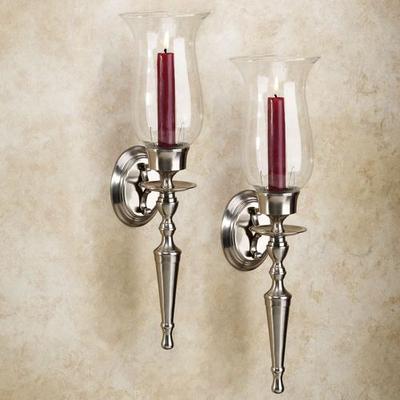
Flythe Consulting Arika Wall Sconce Pair, Pair, Satin NickelThe Arika Wall Sconce Pair is an adaptation of old-fashioned light fixtures, with an appealing design that will complement modern decor. The lacquered solid brass sconces have 4.75 dia.x7 H clear glass hurricanes that will protect your standard...179,00 $*Shipping: 22,95 $Secure redirect to the provider
-
Flythe Consulting Brookville Wall Sconce Pair Antique Brass, Pair, Antique BrassThe Brookville Antique Brass Wall Sconce Pair uses simple design and a delicate aesthetic to create a truly elegant appeal. Each handcrafted, solid lacquered brass sconce has a scrolling arm, solid backplate, chain accents, and a 6 dia.x9 H etched...324,99 $*Shipping: 0,00 $Secure redirect to the provider
-
Flythe Consulting Jonetia Hurricane Wall Sconce Pair Satin Brass, Pair, Satin BrassThe Jonetia Satin Brass Hurricane Wall Sconce Pair proudly displays grandeur on your walls. These hand-forged, solid brass sconces feature a diamond design and fleur-de-lis motif. Sconces have a lacquered, satin brass finish that is done by hand. A...229,00 $*Shipping: 32,06 $Secure redirect to the provider
-
What is the braking deceleration?
Braking deceleration refers to the rate at which a vehicle slows down when the brakes are applied. It is measured in meters per second squared (m/s^2) and represents the negative acceleration experienced by the vehicle as it comes to a stop. The braking deceleration depends on factors such as the vehicle's mass, the friction between the tires and the road, and the force applied to the brakes. A higher braking deceleration means the vehicle will come to a stop more quickly. **
-
How do I calculate the deceleration?
To calculate deceleration, you need to determine the change in velocity and the time it takes for that change to occur. Deceleration is calculated by dividing the change in velocity by the time taken for the change to happen. The formula for deceleration is: deceleration = (final velocity - initial velocity) / time. Make sure to use consistent units for velocity and time in your calculation. **
-
How do you calculate the braking deceleration?
To calculate the braking deceleration, you need to know the initial velocity of the object, the final velocity (usually 0 if the object comes to a stop), and the time it takes for the object to come to a stop. The formula to calculate deceleration is: deceleration = (final velocity - initial velocity) / time. By plugging in the values for final velocity, initial velocity, and time into this formula, you can calculate the braking deceleration of the object. **
-
Friction on an inclined plane causes deceleration.
Friction on an inclined plane causes deceleration because it acts in the opposite direction of the object's motion. As the object moves up or down the incline, the friction force opposes its movement, reducing its speed. This deceleration is due to the friction force converting the object's kinetic energy into heat. The steeper the incline or the greater the coefficient of friction, the stronger the deceleration will be. **
Similar search terms for Deceleration
-
How does uniform deceleration work in physics?
Uniform deceleration in physics refers to a constant decrease in velocity over time. This means that the object is slowing down at a consistent rate. The rate of deceleration is measured in terms of acceleration, with a negative sign to indicate that it is in the opposite direction of the initial velocity. This can be represented by the equation a = (vf - vi) / t, where a is the acceleration, vf is the final velocity, vi is the initial velocity, and t is the time taken. Uniform deceleration is important in understanding the motion of objects and can be used to calculate stopping distances and braking forces in real-world scenarios. **
-
What is the deceleration of the brakes 2?
The deceleration of brakes 2 is 5 m/s^2. This means that the brakes are slowing down the car at a rate of 5 meters per second squared. A higher deceleration value indicates a stronger braking force, which can help the car come to a stop more quickly. It is important for drivers to be aware of the deceleration of their brakes to ensure safe and efficient stopping. **
-
How do you calculate the braking deceleration 2?
To calculate the braking deceleration 2, you can use the formula: a = (v_f - v_i) / t, where a is the deceleration, v_f is the final velocity, v_i is the initial velocity, and t is the time taken to decelerate. First, determine the initial and final velocities of the object. Then, measure the time it takes for the object to come to a complete stop. Finally, plug these values into the formula to calculate the braking deceleration 2. **
-
What is the formula for deceleration in physics?
The formula for deceleration in physics is given by the equation: a = (v - u) / t, where a is the deceleration, v is the final velocity, u is the initial velocity, and t is the time taken. This formula calculates the rate at which an object slows down, or decelerates, over a certain period of time. Deceleration is a negative acceleration, so the value obtained from the formula will be negative, indicating a decrease in velocity. **
* All prices are inclusive of VAT and, if applicable, plus shipping costs. The offer information is based on the details provided by the respective shop and is updated through automated processes. Real-time updates do not occur, so deviations can occur in individual cases. ** Note: Parts of this content were created by AI.